Geophysicist (Postdoctoral Research Associate)
Juan Martin de Blas
(He/him)
Planetary Magnetospheres Laboratory (695)
Did you always know that you wanted to study Geophysics?
Not at all. It is true that, from a very young age, I became obsessed with Astronomy and Geosciences. In high school though, I was a generalist, equally interested in science subjects like Math and Physics as I was in History or Humanities. When I was 18, I was 100% sure I wanted to go to college, but I was uncertain what degree to choose. I ultimately chose Geological Engineering in Complutense University (Madrid, Spain). It was not a well-known degree, but I genuinely enjoyed the study program. To me, it was the perfect blend of training in Physics and Earth Sciences. However, in the final year, this degree began to be more a more applied to solving civil engineering problems, while I realized that my own focus was shifting toward pure science. This is how I ended up enrolling in a Master’s in Geophysics and then pursuing a PhD in Geophysics/Geodynamics.
Tell us about the research projects you are currently working on.
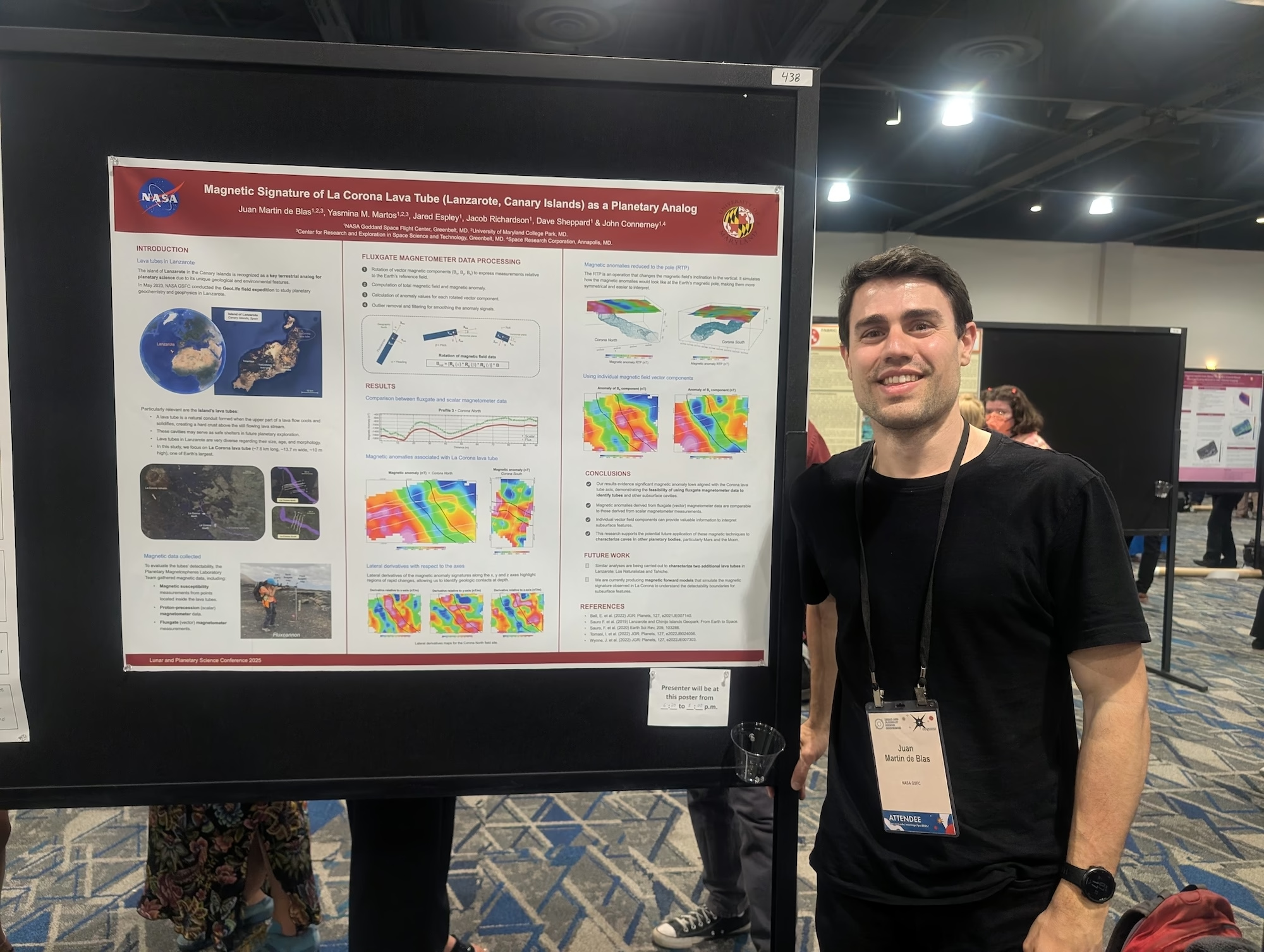
At NASA Goddard Space Flight Center, I am using magnetic data collected in volcanic regions on Earth (e.g., Hawaii, Lanzarote) to detect lava tubes, a specific type of subsurface cavity that forms in basaltic lava fields. This research is based on the principle that magnetometers can detect differences in the magnetic susceptibility of the materials beneath the surface, which allow scientists to identify mineral deposits, geologic discontinuities or subsurface voids.
Detecting underground cavities in terrestrial planetary analogs is extremely important for developing future planetary exploration missions. Rocky planetary bodies like Mars and the Moon present an extremely hostile environment for human exploration due to space radiation, dust storms, micrometeorite impacts, and extreme temperature changes. In this context, planetary caves can offer shelter for astronauts on exploration missions. For similar reasons, these cavities provide excellent conditions for live preservation, making them important astrobiological targets.
Among all geophysical techniques, the magnetic method is ideal for detecting subsurface caves, since it is very cheap and easy to operate. Therefore, my main research goal is to understand the potential and limitations of this extremely promising technique on Earth to gain insights for designing instruments and magnetic airborne surveys in future planetary missions, with a special focus on Martian exploration.

What is one of your favorite moments in your career so far?
One of my favorite moments is in June 2016, when I was part of the scientific crew aboard the Spanish research vessel “Hesperides” in a marine field campaign collecting data from the western part of the Mediterranean Sea. We conducted various scientific investigations, including mapping the seafloor topography using a multibeam echosounder and carrying out sea chemistry, hydrophysics, and marine biology studies. My role was to manage and process marine gravity and magnetic data. The experience was amazing: I learned a lot about processing geophysical data while spending 15 intensive days at sea with truly amazing people. Furthermore, the campaign was scientifically led by Manuel Catalan, one of my scientific mentors and one of the most recognized researchers in Geomagnetism in Spain, who sadly passed away two years ago.

One scientific challenge I am passionate about is reconstructing Mars' geologic history and understanding its evolution as a planetary body using geophysical data.
What do you enjoy the most about your job?
One of the things I enjoy the most about being a researcher is collaborating and interacting with the international scientific community. My appreciation for this began during my PhD studies abroad, when I split my time between the University of Copenhagen (Denmark) and the École Normale Supérieure Paris (France). As a PhD student, I also attended several scientific conferences that allowed me to establish a global network of talented colleagues and friends.
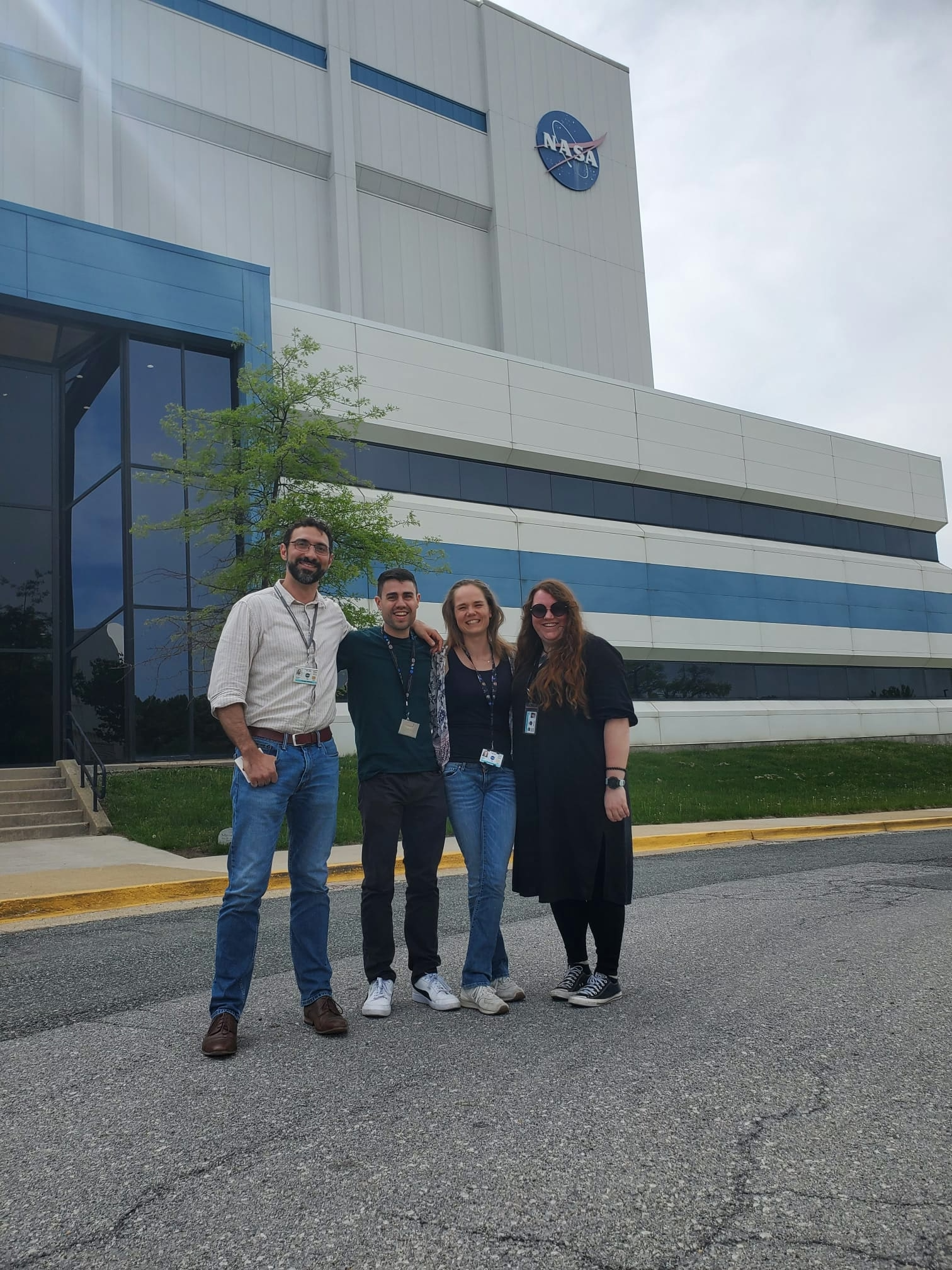
Now, working at NASA Goddard Space Flight Center elevates this experience further. As a member of the Planetary Magnetospheres Laboratory, I value the close collaboration between the engineers and scientists, who work together to achieve a common goal. Engineers are responsible for the design, build, and calibration of the magnetometers. Magnetic data is then collected in the field or in space, and scientists process and analyze the data, providing feedback to the engineers for the design of future instruments and surveys. This creates a very fulfilling feedback relationship for the entire team.
What scientific challenge intrigues you the most?
One scientific challenge I am passionate about is reconstructing Mars’ geologic history and understanding its evolution as a planetary body using geophysical data. One fundamental question that planetary scientists are trying to answer is when the Martian internal magnetic field ceased. This is an event critical for understanding the cooling history of Mars and the evolution of the Martian core. Moreover, investigating Mars’ past magnetism can help determine the nature and origin of the remnant magnetism preserved in some areas of the Martian crust and investigate whether plate tectonics ever existed on the planet.
As mentioned before, I am also extremely interested in using geophysical techniques to characterize the structure and properties of the Martian surface and subsurface. These geophysical techniques — particularly the magnetic method — are an incredibly powerful tool that will allow us to gain a lot of knowledge about Mars before we can send astronauts to the planet.
What inspires you?
I gain a lot of inspiration from teaching, which is something I had the privilege of doing extensively at the University of Copenhagen in Denmark. I first had the opportunity to be a teaching assistant for various courses under the great mentorship of Prof. Giampiero Iaffaldano. That experience was so rewarding that I ended up becoming the main lecturer for a Bachelor’s course!
It is exciting to discover the different pathways used by students to learn and understand complex concepts. Teaching has helped me improve my pedagogy skills, public speaking ability and creativity. These are critical tools that researchers need to use every day to communicate science to collaborators and in scientific conferences.
What do you like to do in your free time?
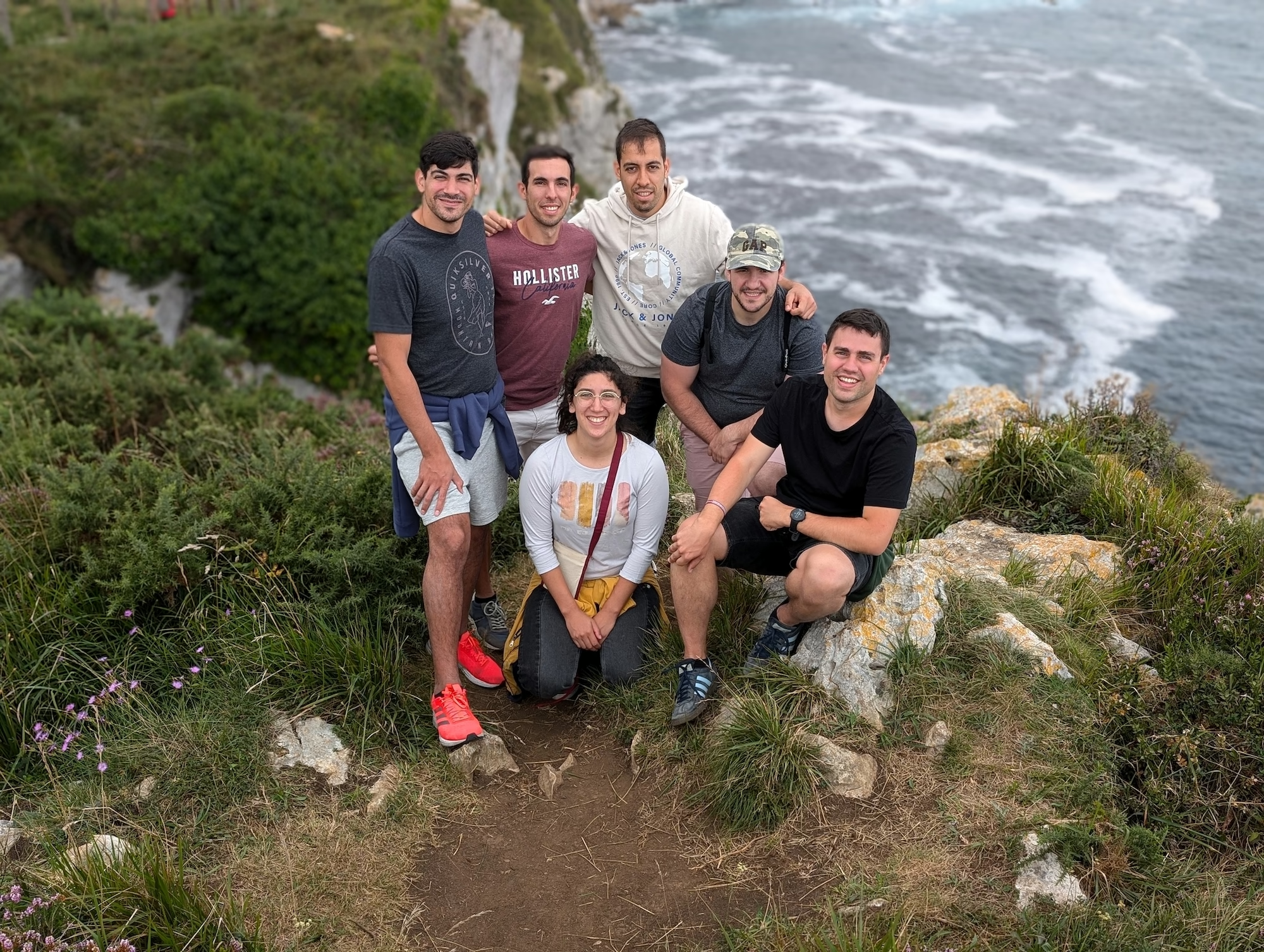
My main activities in my free time are playing music, practicing sports, reading, and travelling. Music has been a lifelong commitment; I began playing piano when I was seven, and I later self-taught the guitar. A digital piano was almost the first thing I purchased when I moved to the US a year ago, and I have never regretted that investment. I also regularly dedicate time to strength training, running, and hiking, which I find crucial for mental clarity and balance. Lastly, I enjoy travelling. As a geologist, I enjoy visiting nature parks, but I like even more exploring ancient ruins and historical places. And among all the cities in the world, Rome is by far my favorite!
Published Date: Jan 30, 2026.
Hometown:
Aranda de Duero, Spain
Undergraduate Degree:
B.Eng. in Geological Engineering, Complutense University of Madrid (Spain)
Post-graduate Degrees:
M.Sc. in Geophysics and Meteorology, University of Granada (Spain)Ph.D in Geosciences, University of Copenhagen (Denmark)